Revenue Operations Consultant vs Internal RevOps Hire: What Each Delivers and When to Choose
Compare what a revenue operations consultant delivers versus an internal RevOps hire, what must stay in-house, and which path fits a B2B SaaS company at Series A.
Request a quote and our experts will contact you within 24 hours with tailored solutions and pricing.
Revenue Operations Consultant vs Internal RevOps Hire: What Each Delivers and When to Choose
By the RevOps for B2B SaaS Editorial Team
A revenue operations consultant is an external specialist who designs and hands off the systems that align marketing, sales, and customer success in a B2B SaaS company, while an internal RevOps hire owns those systems on an ongoing basis and is accountable for results every quarter.
After a forecast miss, the board wants an answer fast. The right choice depends on whether the problem is bounded and diagnostic or recurring and judgment-based.
Two questions come up in every missed-quarter post-mortem. Is the data broken? Or is the ownership model broken? Both feel urgent. Neither maps cleanly to "hire now" or "bring in a consultant." This page compares what each option actually delivers, identifies what must stay internal regardless of outside help, and gives the trigger criteria that determine which path makes sense first.
Key Takeaways
A revenue operations consultant delivers a designed and configured system; an internal RevOps hire delivers ongoing accountability for running it.
CRM administrator access, data governance, and stage-entry judgment calls must stay internal regardless of outside help.
An external engagement is the faster path when the problem is bounded, such as broken attribution or missing stage definitions.
An internal hire is the right call when the problem recurs every quarter and requires someone accountable to the board.
The median private B2B SaaS company spends 8% of annual recurring revenue (ARR) on marketing (SaaS Capital, June 2026, 1,000+ companies). A mis-structured revenue operations function affects how that entire budget is measured and defended.
Quick Comparison: Revenue Operations Consultant vs Internal RevOps Hire
A revenue operations consultant and an internal RevOps hire solve different problems. The consultant diagnoses, designs, and configures the revenue system within a defined engagement, then hands it off. The internal hire runs and improves that system indefinitely, owning the judgment calls and accountability that survive any contract end. The table below compares nine dimensions to help a B2B SaaS company at Series A decide which path to take first.
Dimension
Revenue Operations Consultant
Internal RevOps Hire
Primary deliverable
Documented framework, configured system
Running the system quarter over quarter
CRM admin access
Temporary, scoped to the engagement
Permanent, full
Data governance
Recommends policy; does not own it
Owns and enforces policy
Stage-entry judgment
Defines criteria; does not apply them daily
Applies criteria to edge cases daily
Forecast accountability
None after engagement ends
Direct accountability to leadership
Speed to first result
Faster for bounded problems
Slower: hiring and ramp take time
Institutional knowledge
Borrowed for the engagement period
Builds and compounds over time
Cost structure
Project fee or short-term retainer
Fully-loaded salary and benefits
Best fit
Specific, diagnosable gap
Recurring operational responsibility
What Does a Revenue Operations Consultant Do?
A revenue operations consultant is an external specialist who diagnoses and builds the systems that align marketing, sales, and customer success in a B2B SaaS company. Engagements typically cover stage definitions, customer relationship management (CRM) configuration, attribution setup, pipeline reporting, and lead routing. The consultant designs and hands off a documented framework; the internal team operates it. Work is scoped to one or two high-priority gaps and runs for a defined period.
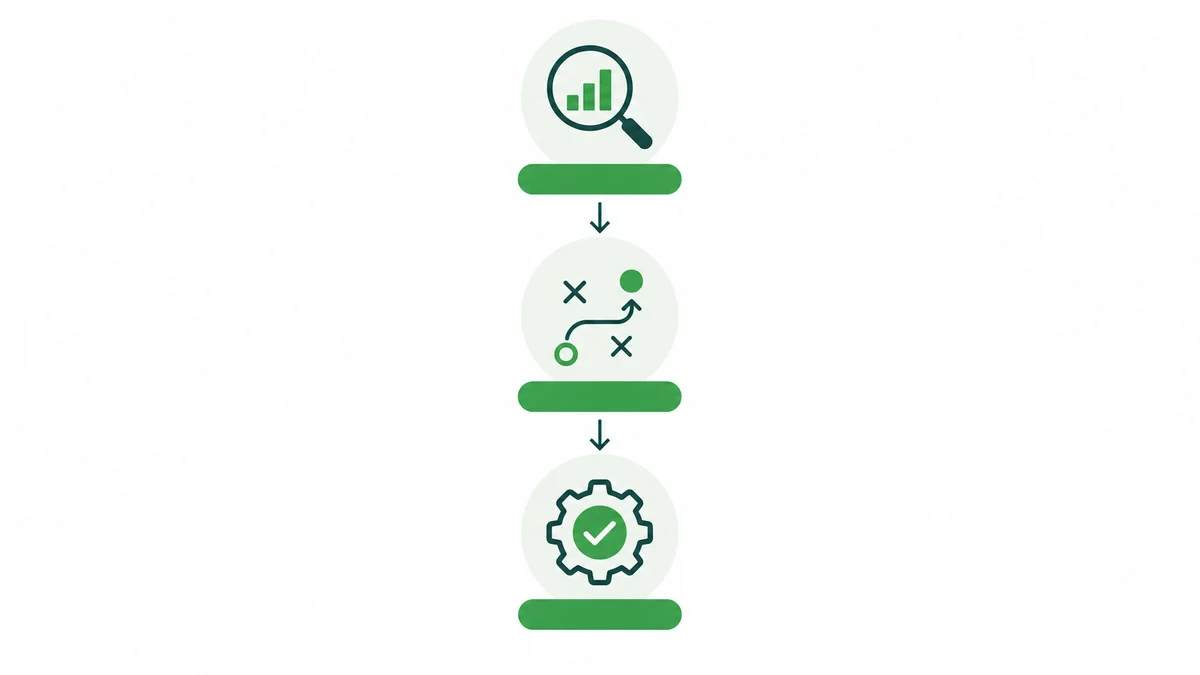
Three-phase revenue operations consulting engagement: diagnostic audit, framework design, and build and handoff
Revenue operations (RevOps) consulting work typically breaks into three phases.
Phase 1: Diagnostic audit
The consultant maps the current funnel against what the CRM actually records. Common findings: stage definitions that exist nowhere in writing, attribution that defaults to last touch, and marketing-qualified lead (MQL) counts that include form fills that never converted to sales-qualified leads (SQLs).
In a June 2026 review of 104 B2B SaaS Google Ads accounts, 78% of form fills never became an SQL (GrowthSpree, June 2026). That gap is a diagnostic finding, not an operational judgment call. It is exactly the kind of bounded problem a consultant can identify before a full-time hire is justified by pipeline volume.
Our data: In 104 audited Google Ads accounts and $78.0M in spend, 78% of form fills never became an SQL, and 89% of accounts ran default attribution (GrowthSpree, June 2026). Both findings are bounded, fixable problems that a consulting engagement can address directly.
Phase 2: Framework design
With the audit complete, the consultant writes stage definitions, which are written entry criteria that specify the exact buyer action required for a lead to move from one funnel stage to the next. The consultant also documents the routing logic and specifies the attribution approach. This framework design is the deliverable that most revenue operations companies treat as their core product.
Phase 3: Build and handoff
The consultant configures the CRM properties, builds the pipeline report, and documents every decision in a format the internal team can maintain. A well-run engagement ends with a system the company understands, not one only the consultant can operate.
What Does an Internal RevOps Hire Deliver That a Consultant Cannot?
An internal revenue operations hire owns the ongoing judgment calls that require institutional knowledge: which deals belong in commit, how stage-entry criteria apply to edge cases, and how to keep CRM data clean as the business changes. Internal ownership also covers data governance, access control, and accountability for forecast accuracy quarter over quarter. The median private B2B SaaS company spends 8% of ARR on marketing (SaaS Capital, June 2026, 1,000+ companies); an internal hire owns the measurement that justifies that spend to the board.
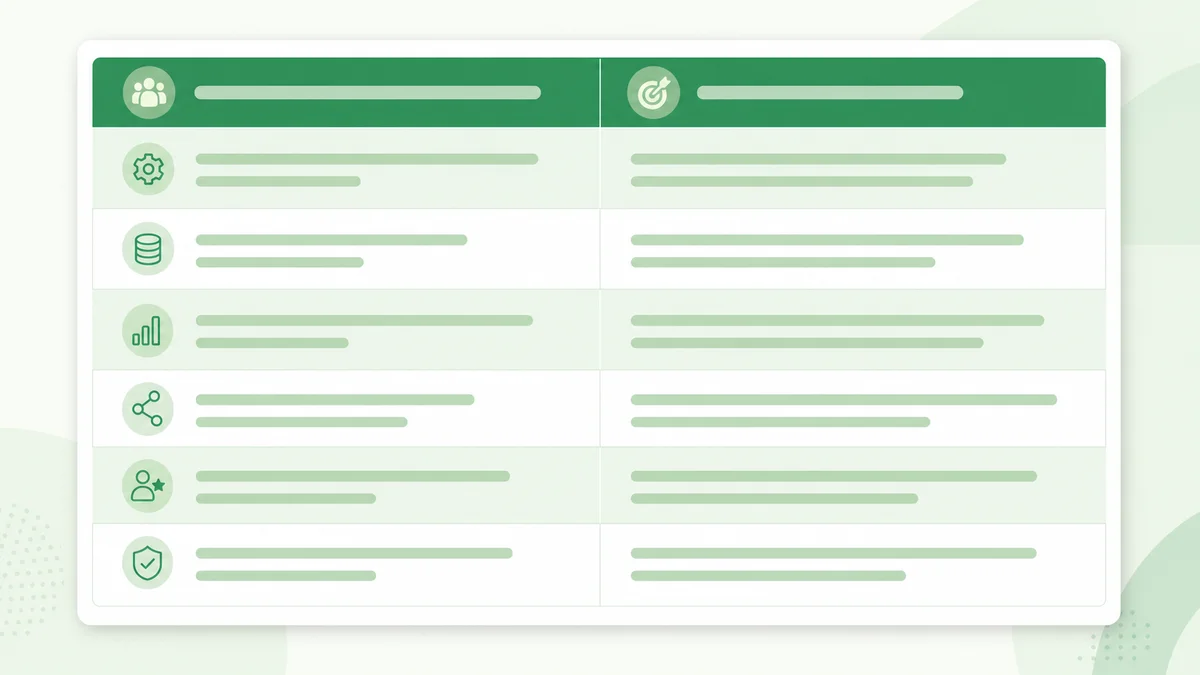
Internal RevOps responsibilities that must stay in-house: CRM access, data governance, forecast accountability
The distinction matters most at performance review time. When the board asks why the commit forecast missed, there must be a person in the room who owns that answer. A revenue operations consultant whose engagement ended months prior is not that person.
What an internal hire compounds over time
Knowledge of which sales reps systematically over-forecast or under-forecast
Understanding of why certain deal categories run longer than the 84-day sales cycle observed as a median across 104 audited accounts (GrowthSpree, June 2026; observed within one audit dataset, not an independent industry benchmark)
Relationships with finance that make pipeline reviews collaborative rather than adversarial
The ability to update stage definitions as the product or market changes, without restarting an external engagement
The MQL to SQL conversion rate is a useful internal benchmark to track. A June 2025 benchmark across 50+ clients from First Page Sage shows 26% for paid search, 30% for LinkedIn, and 51% for SEO. A separate April 2026 benchmark for B2B SaaS Google Ads gives a median of 13% to 18% (GrowthSpree, April 2026, published range, no stated sample). An internal hire tracks which of those ranges the company's own funnel matches, and investigates when it drifts.
What a consultant builds faster
A clean audit with no internal politics attached to the findings
Stage definitions not anchored to how things have always been done
A framework reflecting current practice rather than the process a founding account executive invented in year one
Neither option is better in the abstract. The question is which problem the company needs solved first.
What Must Stay Internal Regardless of Outside Help?
Certain revenue operations responsibilities cannot be delegated to a revenue operations consultant or any external firm without creating significant risk. CRM administrator access, data governance decisions, stage-entry criteria involving commercial judgment, and the pipeline source of truth must stay internal. These areas require accountability that survives contract endings, and they contain customer data that access-control policies should restrict to employees. After a 90-day attribution fix across 104 audited accounts, closed-won deals traced to a campaign rose from 0% to 67% (GrowthSpree, June 2026). The fix is consultant work; maintaining the fix is not.
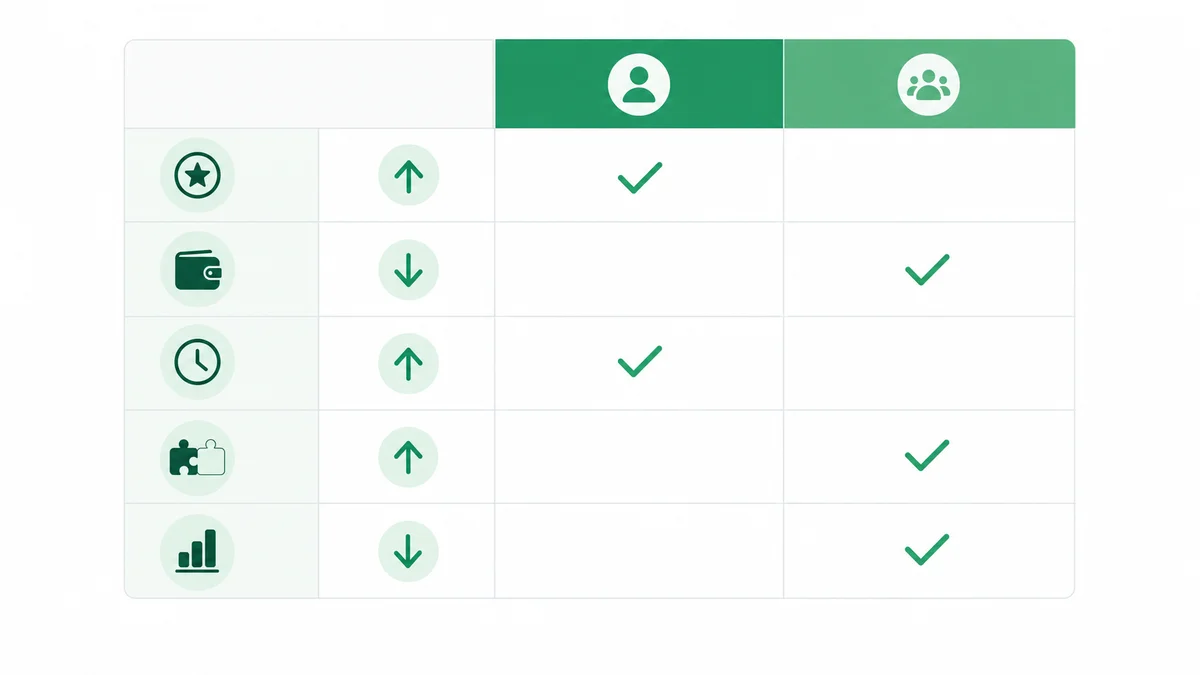
Five trigger criteria scored for revenue operations consultant versus internal RevOps hire
The table below identifies the specific responsibilities that belong internally and the rationale for each.
Responsibility
Why It Must Stay Internal
CRM administrator access
Controls what data is visible, editable, and deletable; requires employee accountability
Stage-entry criteria application
Involves commercial judgment about individual deals; changes with context
Data governance and retention policy
Legal and compliance exposure; cannot be delegated to a third party
Forecast commit decisions
Requires authority, accountability, and knowledge of board expectations
Attribution model selection
Affects budget allocation; must be a business decision, not a consultant preference
Pipeline review ownership
Weekly cadence requires institutional presence, not project availability
A consultant granted permanent CRM admin access creates a dependency. Most B2B SaaS companies discover that dependency when the relationship ends and no one internally can explain why a field was mapped a certain way.
One concrete example: a Google click ID (GCLID) installation. The GCLID is a parameter appended by Google Ads to landing page URLs that, when stored in the CRM, allows closed-won deals to be traced to the originating campaign. Installing that infrastructure is consultant work. Maintaining the GCLID flow, reviewing it monthly, and updating it when Google's API changes is an internal responsibility.
Our data: In a June 2026 review of 104 B2B SaaS Google Ads accounts, 91% had no GCLID reaching the CRM and 89% ran default attribution. After a 90-day fix, closed-won deals traced to a campaign rose from 0% to 67% (GrowthSpree, June 2026). The fix is consultant work; the ongoing maintenance is not.
Which Trigger Criteria Indicate a Consultant First, and Which Indicate an Internal Hire First?
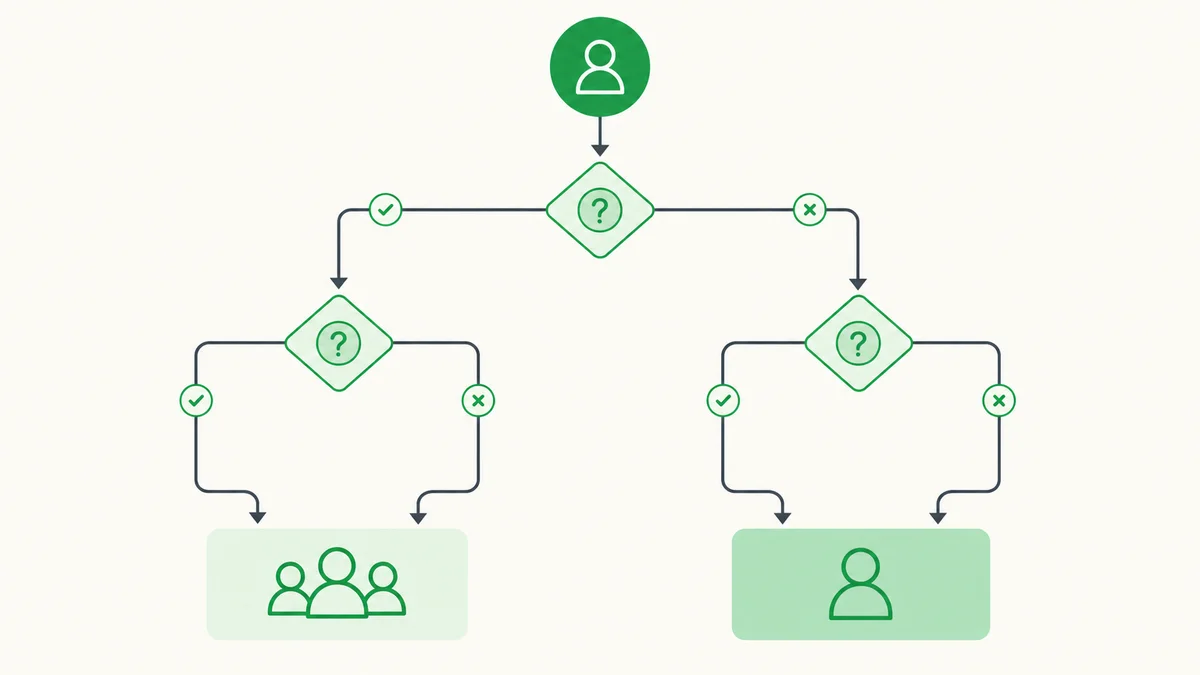
The decision between revenue operations consulting and an internal hire depends on five trigger criteria: whether a defined problem or a broad operational gap exists, how quickly the company needs a working system, whether budget allows a fully-loaded salary, whether the problem recurs quarterly, and whether institutional knowledge is needed to enforce criteria. A bounded diagnostic problem points to a consultant. A recurring operational responsibility points to an internal hire.
Trigger
Points to Consultant
Points to Internal Hire
Nature of problem
Specific, bounded, diagnosable
Recurring, judgment-dependent
Time to result needed
Weeks to months
Quarters to build and compound
Budget available
Project fee fits current budget
Fully-loaded salary is headcount-approved
Frequency
One-time build or fix
Every quarter, indefinitely
Institutional knowledge required
Low: design work is portable
High: edge cases require business context
Pipeline coverage is the ratio of total open pipeline value to the revenue target for the same period. When no internal person tracks it consistently, that is a recurring gap. It points to an internal hire, not a one-time engagement.
Series A signal: When the board asks for pipeline visibility after a forecast miss and no internal person owns the stage definitions, a consultant is faster. The median private B2B SaaS company spent 8% of ARR on marketing in the SaaS Capital (June 2026) survey of 1,000+ companies. That budget cannot be defended without attribution connecting spend to closed-won revenue. A consulting engagement can install that infrastructure before the next board meeting.
Series B signal: When a company has run one or two consultant engagements and resets the same stage definitions each time, the recurring nature of the problem is the signal. That is when an internal hire compounds value that a sequence of engagements cannot replicate.
When Is Revenue Operations Consulting the Faster Path at Series A?
Revenue operations consulting is the faster path at Series A when the company faces a specific, bounded problem: a missed forecast with no documented stage definitions, or ad spend that cannot be traced to closed-won revenue. In a June 2026 review of 104 B2B SaaS Google Ads accounts, 91% had no Google click ID reaching the CRM (GrowthSpree, June 2026). A consultant can identify and fix that class of problem before a full-time hire is justified by pipeline volume.
Decision flowchart for choosing a RevOps consultant or internal hire at Series A or Series B
Revenue operations consulting makes sense when any three of the following apply:
No written stage definitions exist, or the definitions in the CRM do not match what sales actually uses.
Marketing and sales report different lead counts for the same quarter.
A forecast miss has occurred and no one can explain the discrepancy at the stage level.
Ad spend is growing but no attribution connects it to pipeline or closed-won revenue.
A CRM migration or rebuild is coming and needs an outside audit before configuration begins.
The MQL to SQL conversion rate is a useful diagnostic starting point. As of June 2025, a benchmark across 50+ clients from First Page Sage shows 26% for paid search, 30% for LinkedIn, and 51% for SEO. A separate April 2026 benchmark for B2B SaaS Google Ads gives a median of 13% to 18% (GrowthSpree, April 2026, published range, no stated sample). The two sources define stages separately and should not be averaged.
If internal conversion rates fall far below either range, that gap is a bounded problem a consultant can audit. If internal rates are within range but the forecast still misses, the problem more likely sits in commit criteria or pipeline management. That is an operational responsibility pointing toward an internal hire.
The published median cost per SQL on Google Ads runs $800 to $2,500 (GrowthSpree, April 2026, published range, no stated sample). At that cost, a consulting engagement that improves attribution and reduces wasted spend can return its fee before a full-time hiring cycle closes.
Who This Comparison Does Not Apply To
The revenue operations consultant versus internal hire comparison applies to B2B SaaS companies with an existing CRM, a sales team of at least two people, and ARR above roughly $1 million. Companies without a CRM or without a structured sales motion are not ready for either path. Pre-CRM companies should select and configure a CRM first, before designing a revenue operations function around it. The median private B2B SaaS company spent 8% of ARR on marketing in the SaaS Capital (June 2026) survey; companies that have not yet built a CRM are spending that budget without the infrastructure to measure it.
The comparison also does not apply to:
Enterprise companies above $100 million ARR: At that scale, RevOps is a department, not a hire-or-consult decision. The question becomes how to structure multiple internal specialists.
Seed-stage companies below $1 million ARR: The founder or a generalist ops person typically handles the RevOps layer until pipeline volume justifies dedicated ownership.
B2C and e-commerce businesses: The stage models, attribution approaches, and forecasting frameworks here are specific to B2B SaaS with a sales team. B2C purchasing dynamics differ fundamentally.
Frequently Asked Questions
We are hiring our first RevOps person - do we need a marketing technology consultant instead?
A marketing technology consultant is an external specialist focused on configuring the tools marketing runs: CRM properties, email automation, attribution tracking, and form routing. A RevOps hire covers that same stack plus the sales pipeline, forecasting layer, and the reporting that connects both teams. If the immediate problem is broken attribution, a marketing technology consultant is faster. If marketing and sales report different numbers and no one owns the stage model, a RevOps hire addresses that gap directly.
We missed our forecast and the board wants pipeline visibility - is revenue operations consulting the right next step?
Revenue operations consulting is a reasonable next step when the company lacks internal capacity to diagnose the forecast miss and build the reporting layer the board needs. A consultant can audit stage definitions, rebuild the pipeline report, and hand off a documented framework within a defined engagement. When the root problem is data infrastructure, such as no click ID reaching the CRM, consulting addresses it faster than a hiring cycle.
We are evaluating outside help for RevOps - what do revenue operations companies typically own versus what stays internal?
Revenue operations companies are firms or practices that provide consulting services, including diagnostic audits, CRM builds, and framework design. They typically own the diagnostic work, framework design, and initial build. What stays internal is ongoing CRM administration, data governance decisions, access control, and stage-entry judgment calls requiring institutional knowledge. A consultant who owns data governance permanently creates a dependency most B2B SaaS companies cannot sustain past Series B.
Verdict: Which Path Fits Your Stage?
The choice between a revenue operations consultant and an internal RevOps hire comes down to the nature of the problem, not the size of the company.
Bounded, diagnostic problem at Series A: Revenue operations consulting is faster and often sufficient. A consulting engagement can install the framework, fix the attribution gap, and produce a documented system the internal team can operate. For context, the median private B2B SaaS company spent 8% of ARR on marketing in 2026 (SaaS Capital, June 2026). A mis-attributed marketing budget is a fixable problem. A consulting engagement addresses it faster than a hiring cycle.
Recurring operational responsibility at Series B: An internal RevOps hire compounds value that a series of consultant engagements cannot replicate. Forecast accountability, data governance, and stage-entry judgment require permanent, internal ownership.
First hire decision: If the problem is a broken CRM or a missing attribution layer, a consulting engagement often returns value faster than a full hiring and ramp cycle.
What must never move outside: CRM admin access, data governance, and commit decisions. Those stay internal regardless of how capable the consultant is.
If a forecast miss or attribution gap is the immediate problem, the right next step is a structured conversation with a RevOps expert.