Request a quote and our experts will contact you within 24 hours with tailored solutions and pricing.
Cross-Platform Attribution for B2B SaaS: How It Works Across Paid Search, LinkedIn, and Organic
By the RevOps for B2B SaaS Editorial Team. Last updated: November 4, 2026.
Cross-platform attribution is the practice of tying each ad click, organic visit, and form fill to one person and one deal in the customer relationship management (CRM) system. It lets B2B SaaS teams credit revenue to paid search, LinkedIn, and organic.
Most setups fail at the first step. In an audit of 104 Google Ads accounts, 91% had no Google click ID reaching the CRM (GrowthSpree, June 2026). The ad platforms then report conversions while the CRM shows no source for most deals. This guide explains what the setup requires, how to join the three channels at the deal level, and what breaks when click parameters go missing. It builds on the attribution models guide.
Key Takeaways
Cross-platform attribution connects ad clicks and organic visits to one CRM record and then to the closed-won deal, using stored identifiers.
In a June 2026 audit, 91% of 104 Google Ads accounts had no Google click ID reaching the CRM (GrowthSpree, June 2026).
Paid search needs a GCLID, LinkedIn needs li_fat_id, and organic needs landing page and referrer captured at first touch.
Click-based attribution misses pre-form influence, so it works best paired with a self-reported "how did you hear about us" field.
What Is Cross-Platform Attribution and How Does It Work Across Ad Channels?
Cross-platform attribution is a method that ties ad clicks and organic visits from different channels to one customer record, then to the closed-won deal. It works by storing identifiers such as the Google click ID (GCLID) in the CRM. The average B2B customer journey runs 272 days (Dreamdata, 2026), so those identifiers must persist for months.
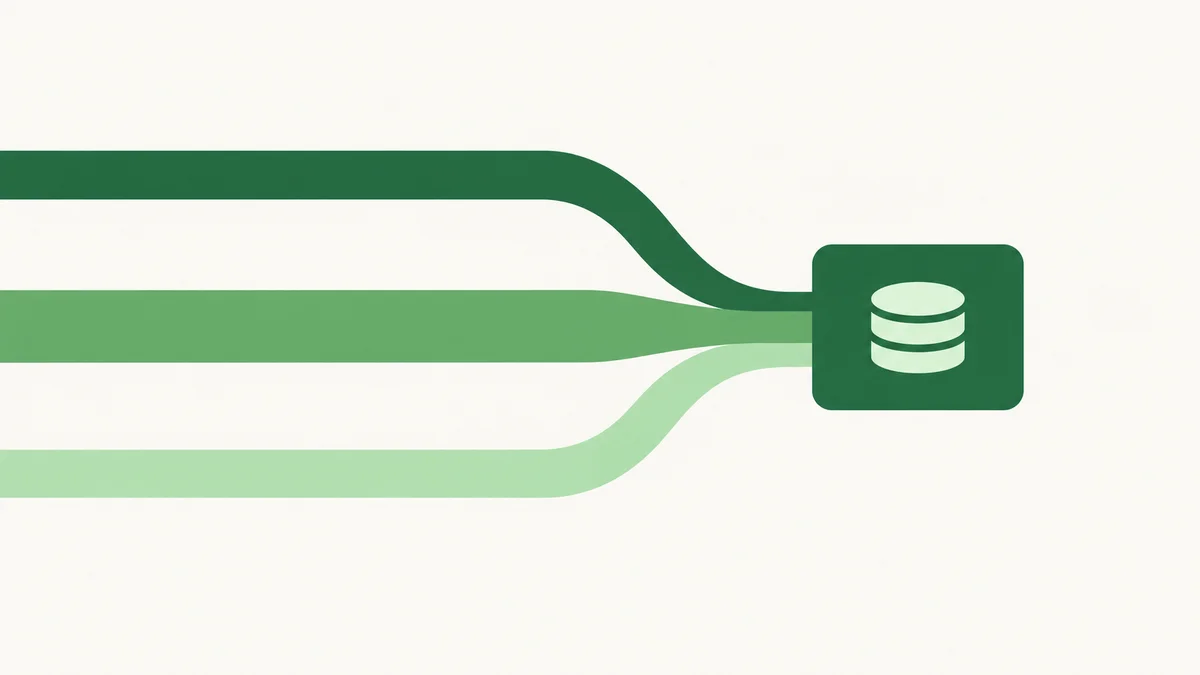
Three colored lines from ad, search, and organic sources merging into one CRM record
Each ad platform reports on its own island. Google Ads counts the conversions it can see, LinkedIn counts the ones it can see, and neither knows which deal closed. The CRM is the only system that holds the deal, so the CRM must also hold the identifiers that point back to each click.
Which identifiers does each channel use?
Four kinds of data carry a visit from the ad platform to the CRM. UTM parameters are tags added to a URL that record the source, medium, and campaign of a visit. The click IDs are platform-issued and more precise.
Channel
Identifier
Where it comes from
What storing it enables
Paid search (Google Ads)
GCLID
Appended to the landing page URL after an ad click
Matching SQL and closed-won stages back to the click
LinkedIn Ads
li_fat_id
Appended to landing page URLs when enhanced conversion tracking is on
Matching CRM outcomes to LinkedIn through the Conversions API
Organic search and referral
Landing page, referrer, UTMs
Read from the first page view
Separating organic from direct and dark traffic
Any paid channel
UTM parameters
Added to ad URLs by the team
Campaign-level reporting across platforms
Where do attribution models fit?
The identifiers are the raw material. The attribution model decides how credit is split once the data exists. A model cannot repair missing inputs, so the data path comes first. Model choice is covered in the guide to marketing attribution models.
Why Does Cross-Platform Attribution Break Before It Starts?
Cross-platform attribution breaks before it starts when click identifiers never reach the CRM. In a June 2026 audit of 104 Google Ads accounts, 91% had no Google click ID reaching the CRM (GrowthSpree, June 2026). Closed-won deals could not be matched to the campaigns behind them, so every channel report stayed a platform estimate, not a pipeline fact.
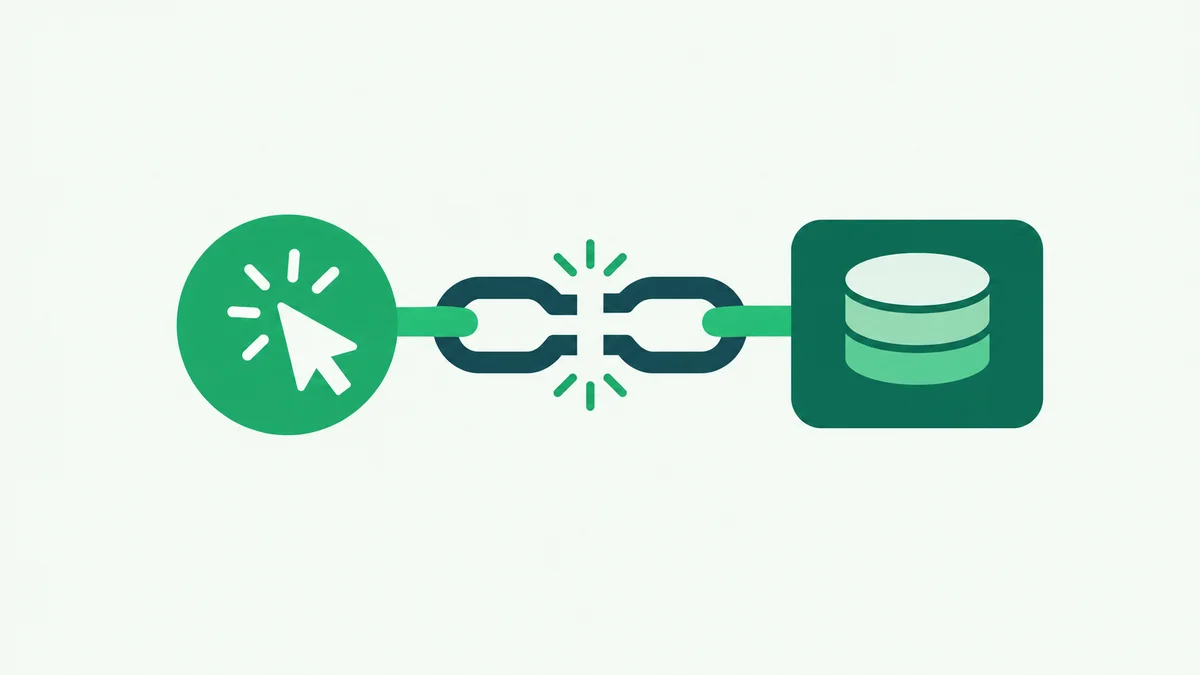
A broken chain link between an ad click icon and a CRM record icon
What the audit found: 91% of 104 audited B2B SaaS Google Ads accounts had no Google click ID reaching the CRM, and 89% ran default attribution. After a 90-day attribution fix, the share of closed-won deals traced to a campaign went from 0% to 67% (GrowthSpree, June 2026).
The audit covered $78.0M in spend, and 78% of form fills never became a sales-qualified lead (SQL) (GrowthSpree, June 2026). A form fill is a weak stand-in for pipeline. Platforms that bid on form fills learn to find more form fills.
The journey is also long and mostly invisible to the CRM. Dreamdata finds that 81% of the B2B customer journey now happens outside the sales pipeline, up from 70% a year earlier (Dreamdata, 2026). Its data comes from its own customer base, so treat the figure as directional. A CRM-only, last-touch view sees only the final stretch. The last-touch attribution page covers where that bias shows up.
How Does Cross-Channel Attribution Work Across Paid Search, LinkedIn, and Organic?
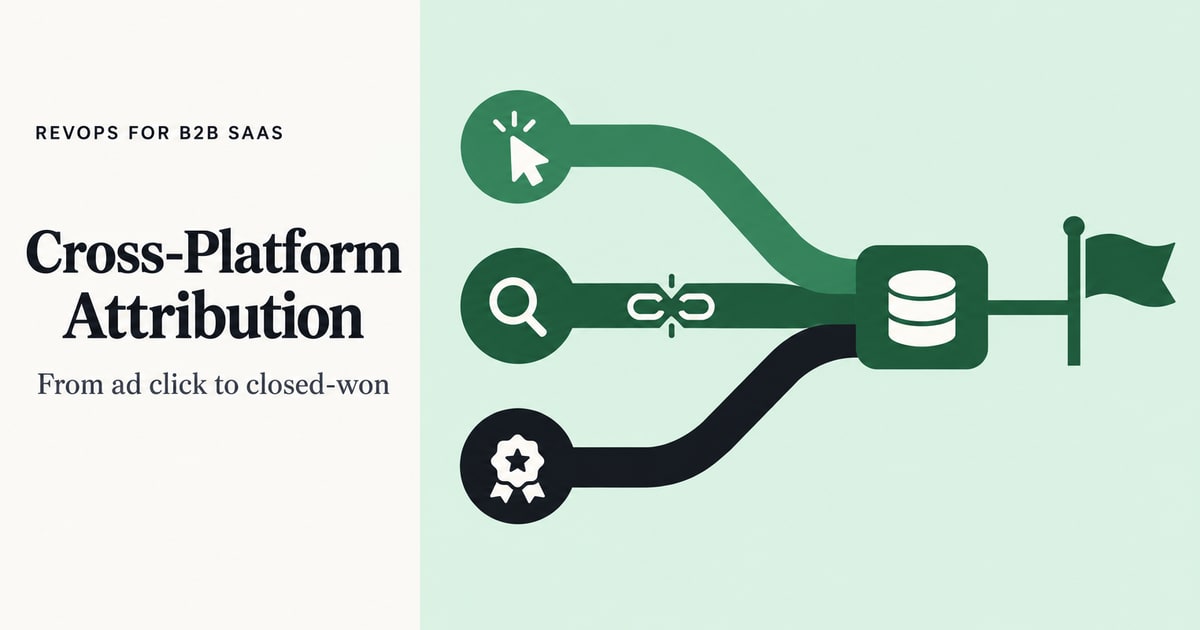
Cross-channel attribution works by stamping each lead with its source at first touch, then reading those stamps at the opportunity. Paid search contributes a GCLID, LinkedIn contributes li_fat_id, and organic contributes the landing page and referrer. Joined at the deal level, the three sources feed one pipeline report instead of three platform dashboards that each claim the same conversion.
Three channel paths of different greens reaching one closed-won flag
How does paid search feed the join?
The Google click ID (GCLID) is a parameter Google Ads appends to the landing page URL after an ad click, used to match later sales stages to that click. Google's documentation is direct: "We recommend including GCLIDs in your import requests where possible, even if you have Google tag set up to track enhanced conversions for leads." (Google for Developers, 2026)
Google moved custom offline uploads to the Data Manager API from June 15, 2026. Teams that send CRM stages back to Google should build that return path on the new API.
How does LinkedIn feed the join?
The li_fat_id is LinkedIn's first-party click identifier. LinkedIn's documentation describes capturing it as "critical to power the Conversions API for improved match rates" (Microsoft Learn, 2026).
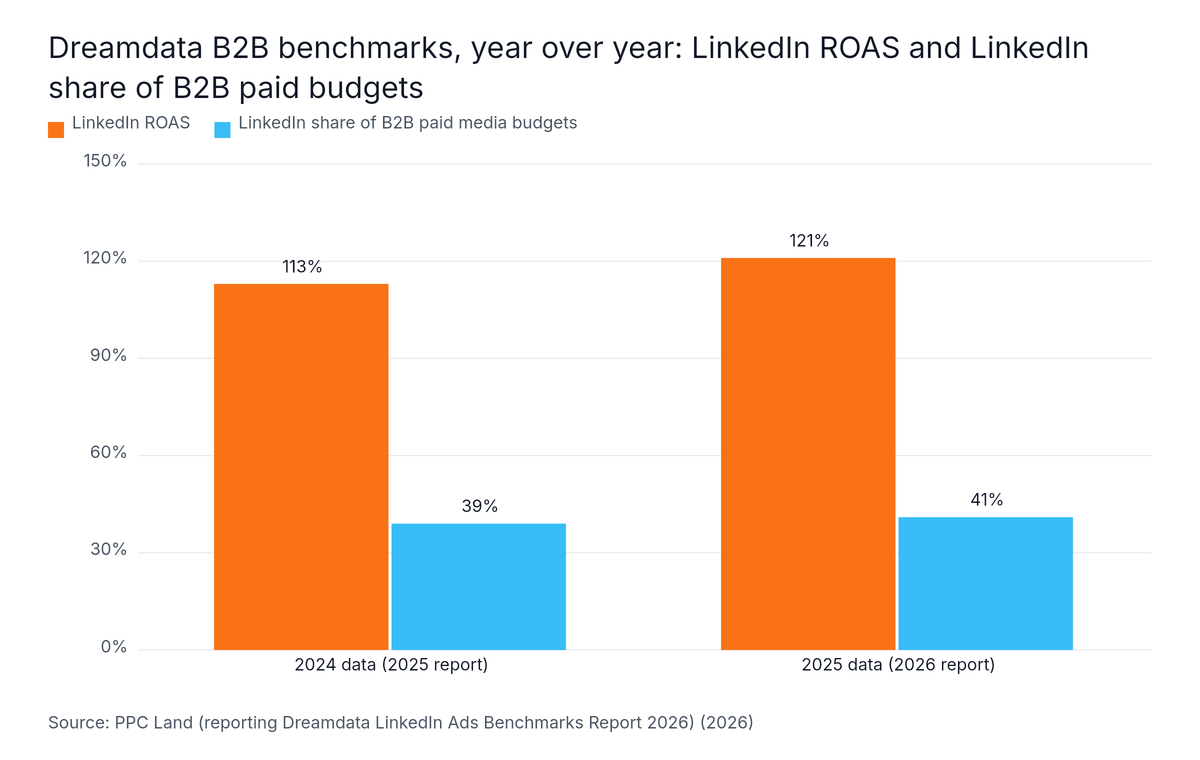
The join matters because LinkedIn carries 41% of total B2B ad budgets in the customer base of Dreamdata (Dreamdata, 2026). Also, 75% of Dreamdata customers running LinkedIn Ads have integrated its Conversions API (PPC Land, 2026).
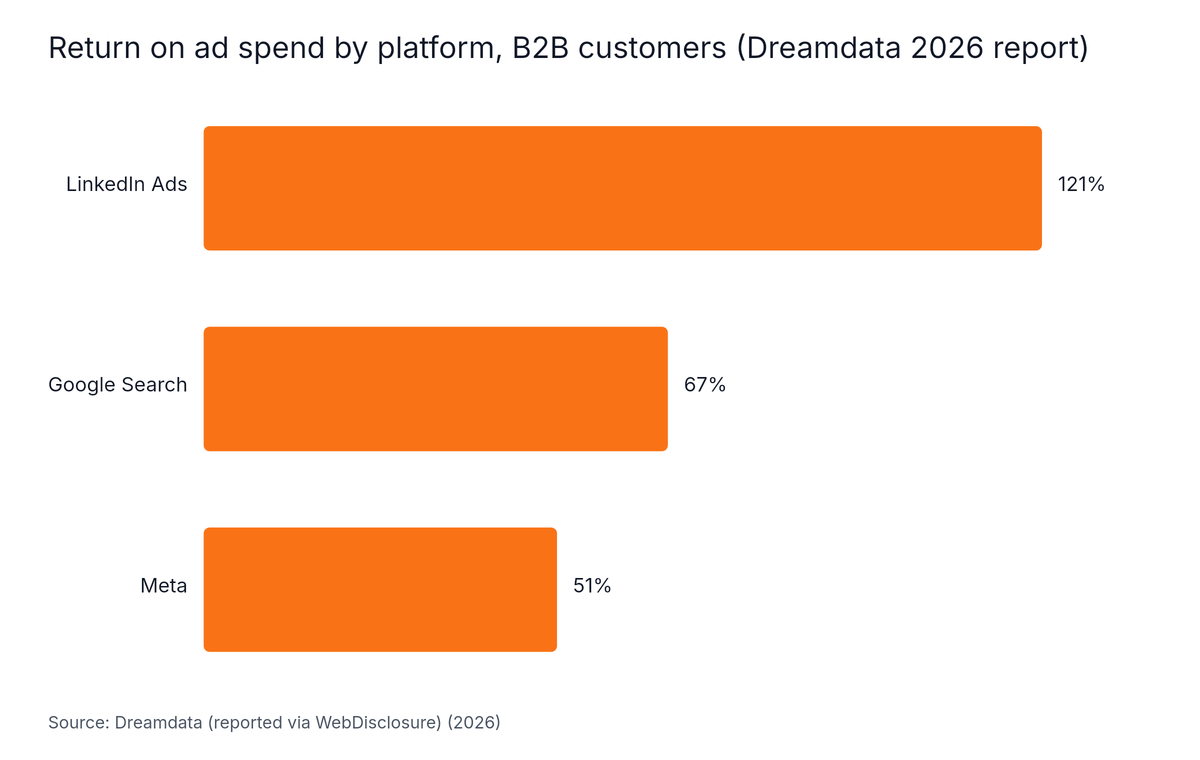
LinkedIn returns 121% return on ad spend in the B2B dataset, against 67% for Google Search and 51% for Meta (Dreamdata, 2026). That figure uses Dreamdata's data-driven model, so it is not comparable to platform-reported return on ad spend.
Horizontal Bar chart: Return on ad spend by platform, B2B customers (Dreamdata 2026 report). Highest: LinkedIn Ads at 121%.
Organic has no click ID, so it is inferred. The first page view supplies the landing page, referrer, and UTMs, and those are written to the lead. Anything with no recorded source falls into direct, which inflates quickly when capture is patchy. A self-reported "how did you hear about us" field is the cross-check.
The channel split matters because outcomes differ. A benchmark across 50+ clients puts marketing-qualified lead (MQL) to SQL conversion at 26% for paid search, 30% for LinkedIn, and 51% for SEO (First Page Sage, 2025). The B2B SaaS conversion benchmarks cover how those stages are defined.
How Do You Join Paid Search, LinkedIn, and Organic Data at the Deal Level?
Joining paid search, LinkedIn, and organic data at the deal level means copying each lead's click identifiers and source fields from the contact record to the opportunity, then reporting pipeline by those fields. The median sales cycle across 104 audited accounts was 84 days (GrowthSpree, June 2026), so the six steps below must keep identifiers intact for months.
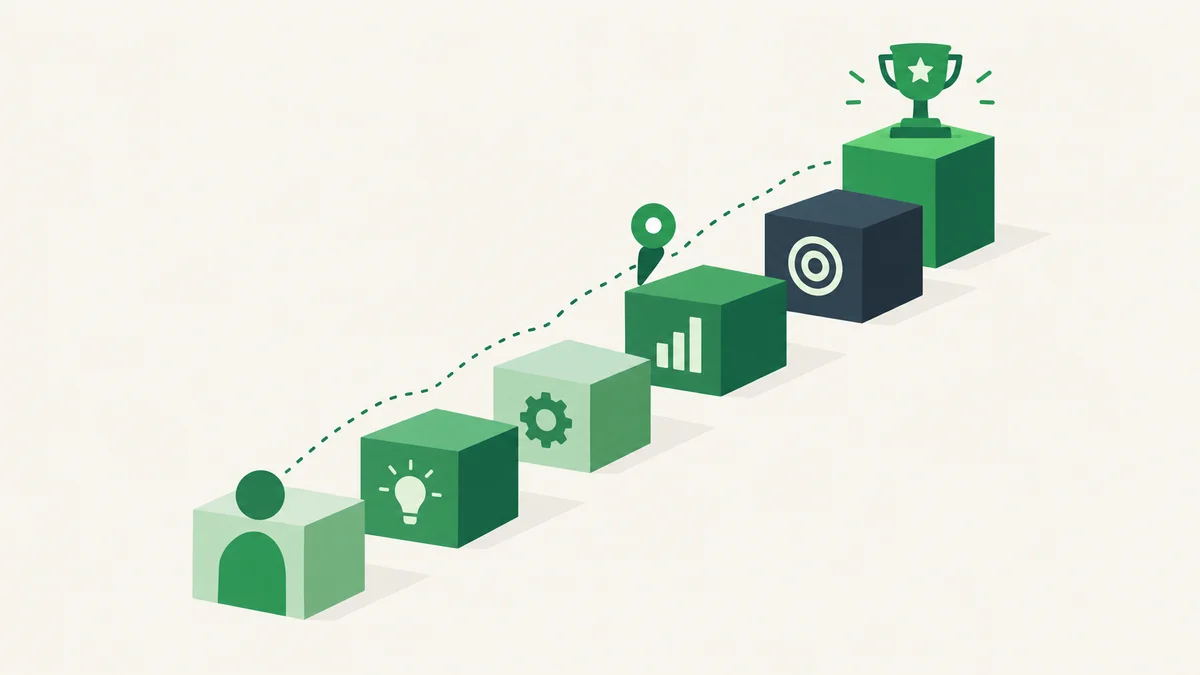
Six stacked step blocks rising like stairs from a form to a closed deal
A deal-level join is the practice of attaching marketing touches to the opportunity, not just the contact. It matters because a deal usually involves several people, and each of them may arrive through a different channel.
What are the six steps?
Capture on landing. Read gclid, li_fat_id, UTMs, landing page, and referrer from the URL on the first page view.
Persist in first-party storage. Save those values in a first-party cookie or local storage so they survive navigation before the form. Browser storage limits and platform import windows vary, so check each platform's current documentation.
Write to hidden form fields. Add hidden fields to every form (example names: gclid, li_fat_id, utm_source, utm_campaign, first_landing_page) and fill them from storage on submit.
Map to CRM records. Store the fields on the contact. Copy them to the opportunity through contact roles, and decide which stamp wins: first touch, lead creation, or opportunity creation.
Return qualified stages. Send SQL and opportunity stages back to Google through the Data Manager API and to LinkedIn through the Conversions API, at least daily.
Verify. Pull last month's closed-won deals and count how many carry a stored click ID or source. That share is the metric to watch.
The 90-day fix in the audit worked by completing these steps, and step 6 is where it showed: the share of closed-won deals traced to a campaign rose from 0% to 67% (GrowthSpree, June 2026). The field-level mechanics of the first three steps are covered in the ad click to CRM guide.
Who owns the setup?
The work usually falls to marketing operations or to the revenue operations team that owns the CRM schema. Either way, one person must own field names and the stamping rule, or fields drift between forms.
Step
Output
Verification
Capture and persist
Click IDs and UTMs in first-party storage
Test click shows values in browser storage
Submit to hidden fields
Values on the lead record
New test lead carries gclid and li_fat_id
Map to opportunity
Source fields on the deal
Closed-won report groups by source
Return stages
Offline conversions in each platform
Platform shows imported SQL events
Channel economics also shift over time. LinkedIn return on ad spend was 113% in the 2025 report and 121% in the 2026 report (PPC Land, 2026). Stored fields let a team see its own numbers instead of benchmarks.
Grouped Bar chart: Dreamdata B2B benchmarks, year over year: LinkedIn ROAS and LinkedIn share of B2B paid budgets. Highest: 2025 data (2026 report) at 121%.
When click parameters are not stored, the CRM loses the link between a deal and its ad click. Offline conversions fail to match, ad platforms keep optimizing on form fills, and organic and direct traffic absorb credit they did not earn. Matching LinkedIn conversions on corporate email alone shows barely a 30% match rate (Factors.ai, 2026).
A flat cloud hiding most of a winding path with only the final stretch visible
Matching on email alone is the weakest fallback, because LinkedIn members often sign in with personal emails. Factors.ai gives no match-rate sample size, so read the figure as directional. Capturing li_fat_id on form fills is the fix.
Missing field
What breaks
Symptom in reports
Fix
GCLID
Offline import cannot match stages to clicks
Google shows form fills, CRM shows no paid source
Capture gclid to a hidden field and send SQL stages back
li_fat_id
LinkedIn matching falls back to hashed email
Low match rate, LinkedIn under-credited
Capture li_fat_id and pass it in Conversions API events
UTM parameters
Campaign and medium are blank
Large "unknown" source bucket
Standardize UTMs and write them to the lead
First landing page and referrer
Organic cannot be separated from direct
Direct inflates, organic looks small
Store both at first touch
Why does optimizing on form fills cost pipeline?
Ad platform bidding learns from whatever conversion it is given. A June 2026 study of 1,412 ad variants across 96 accounts found cost per SQL tracked pipeline at a correlation of 0.71, while click-through rate sat at 0.09 (GrowthSpree, June 2026). Without stored identifiers, only click-through and form-fill signals reach the platforms, and those are the weaker predictors.
What Can Click-Based Attribution for B2B SaaS Not See?
Click-based attribution for B2B SaaS cannot see influence that happens before a buyer clicks a paid search, LinkedIn, or organic link or fills a form. A 2026 survey of 4,611 buyers found the vendor favored before contact wins 82% of the time (6sense, 2026), so stored click parameters describe the visible tail of a journey, not all of it.
In the same 2026 Global B2B Buyer Experience Report, buying groups spend about 60% of an average 10.3-month cycle in selection before contacting a seller (6sense, 2026). The report also states that "a vendor that doesn’t make that initial list has a less than 10% chance of winning" (MarTech Series, 2026).
What should a team pair with click IDs?
A self-reported "how did you hear about us" field on every form.
Branded search trends as a proxy for LinkedIn and word-of-mouth influence.
A stated attribution approach that both marketing and sales accept.
One published range with no stated method or publisher rates single-model attribution at 38% to 58% accuracy and a hybrid of multi-touch, self-reported, and branded search lift at 82% to 92% (2026). The numbers are unsampled opinion, so use them as direction only.
Who is this not for?
Cross-platform attribution is not for teams with no sales team and no CRM yet, because there is no deal record to join to. Stored identifiers also do not replace consent. Tracking consent rules vary by region, so check with counsel before storing click parameters; this page gives no legal advice.
Frequently Asked Questions
How does cross-channel attribution work across paid search, LinkedIn, and organic?
Cross-channel attribution works by capturing each channel's identifiers at first touch, storing them on the lead in the CRM, and carrying them to the opportunity. Paid search supplies a GCLID, LinkedIn supplies li_fat_id, and organic supplies landing page and referrer. Pipeline and closed-won revenue are then reported by those stored fields rather than by each platform's own count.
Conclusion: What to Do Next
Cross-platform attribution for B2B SaaS comes down to one rule: store the click before you model it. The audit numbers show how often that rule is missed, and the fix is a short, checkable setup.
Capture gclid, li_fat_id, UTMs, landing page, and referrer on the first page view.
Write them to hidden form fields, then to the contact and the opportunity.
Send SQL and opportunity stages back to Google and LinkedIn daily.
Check the share of closed-won deals with a stored source every month.
Pair click data with a self-reported field, because pre-form influence stays invisible.
For model selection after the data path works, read the attribution models guide. One funnel. One set of definitions. One number everyone trusts. To check your own setup against these steps, Meet with an expert for a free consultation and bring your CRM and reporting questions.
Written by
Ishan Manchanda
Ishan Manchanda is co-founder of GrowthSpree, a B2B SaaS marketing consultancy founded in 2017 that has managed $60M+ in ad spend across 300+ B2B SaaS companies. He focuses on demand generation, go-to-market strategy and pipeline growth, and has been featured in Silicon Valley Times, SaaS Mag and the Unbounce podcast.
 Ishan ManchandaNov 7, 2026