Blog
Revenue Operations Software: What the Stack Covers, How to Evaluate It, and What Is Free
Map every RevOps software category by what it solves, what it misses, and which free tiers exist before a B2B SaaS team can justify paid tools.
Learn what attribution models are, how each type works in a B2B SaaS funnel, and what a Series A team needs before any model gives reliable results.

Map every RevOps software category by what it solves, what it misses, and which free tiers exist before a B2B SaaS team can justify paid tools.

91% of B2B SaaS accounts lose click data before the CRM. Learn the 5 criteria that separate attribution software that works from software that doesn't.
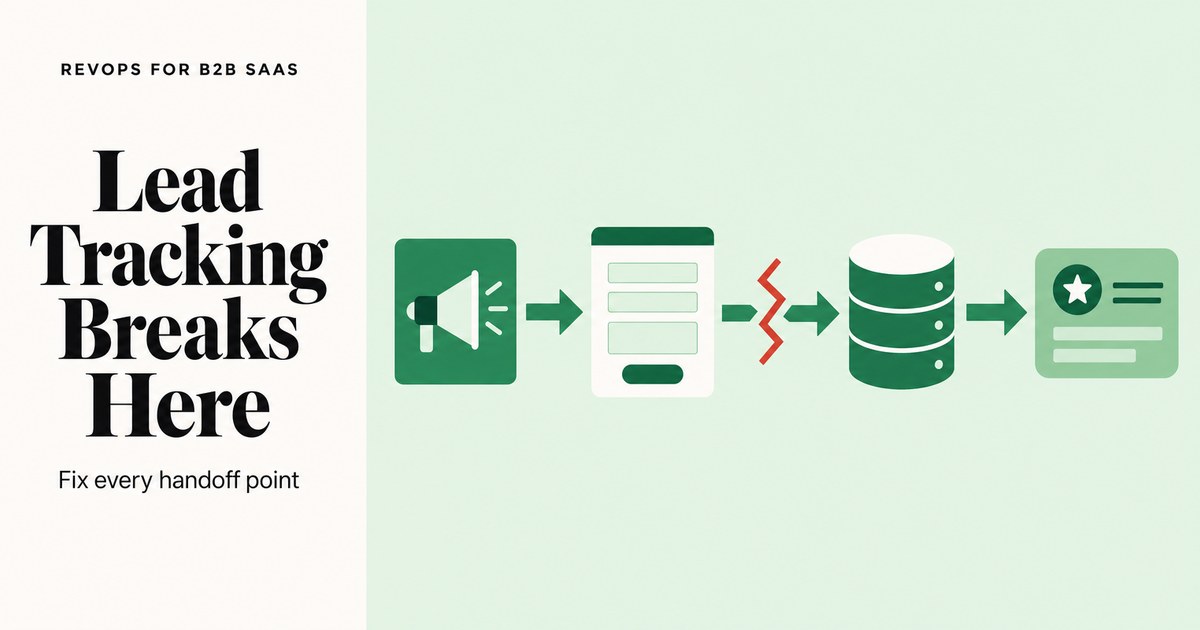
91% of audited accounts had no Google click ID in the CRM. Map every break point in the lead tracking chain and audit each handoff without buying new tools.
Request a quote and our experts will contact you within 24 hours with tailored solutions and pricing.
revopsforb2bsaas.com
Last updated: Oct 16, 2026
By the RevOps for B2B SaaS Editorial Team | Last updated: October 13, 2026
Attribution models in B2B marketing are rules or algorithms that assign credit for a conversion or sale to one or more marketing touchpoints a buyer encountered before that outcome; the model a team uses determines which channels appear to drive revenue and which receive budget.
Most B2B SaaS teams never make a deliberate choice about their attribution model. An audit of 104 Google Ads accounts and $78.0M in spend found that 89% were running default attribution with no deliberate selection by the team behind the account (GrowthSpree, June 2026; source not linked per editorial policy). The result is a familiar problem: the ad platform reports conversions, the customer relationship management (CRM) system shows a different number, and marketing and sales cannot agree on what drove a deal.
This guide explains what each attribution model measures, where each one breaks down on a multi-touch B2B funnel, and what a Series A team needs before any model produces reliable results.
Key Takeaways
- Attribution models in B2B marketing assign credit for conversions to marketing touchpoints; the model chosen determines which channels receive budget.
- 89% of 104 audited B2B SaaS Google Ads accounts ran default attribution without a deliberate choice (GrowthSpree, June 2026; source not linked per editorial policy).
- Single-touch models miss most of a long B2B sales cycle; multi-touch models are more accurate but require complete data foundations.
- Google Ads uses data-driven attribution by default; linear, time decay, and position-based models are no longer supported in the platform.
- Before any model gives reliable results, three data conditions must be met: click IDs stored in the CRM, qualified conversion events, and consistent UTM parameters.
- A 90-day attribution fix across 104 accounts moved the share of closed-won deals traceable to a campaign from 0% to 67% (GrowthSpree, June 2026; source not linked per editorial policy).
In this guide:
Attribution models in B2B marketing are rules or algorithms that assign credit for a conversion or sale to one or more of the marketing touchpoints a buyer encountered before that outcome. In B2B SaaS, where a median sales cycle runs 84 days across audited accounts (GrowthSpree, June 2026; source not linked per editorial policy), the model chosen determines which channels appear to drive revenue and, by extension, where budgets go.
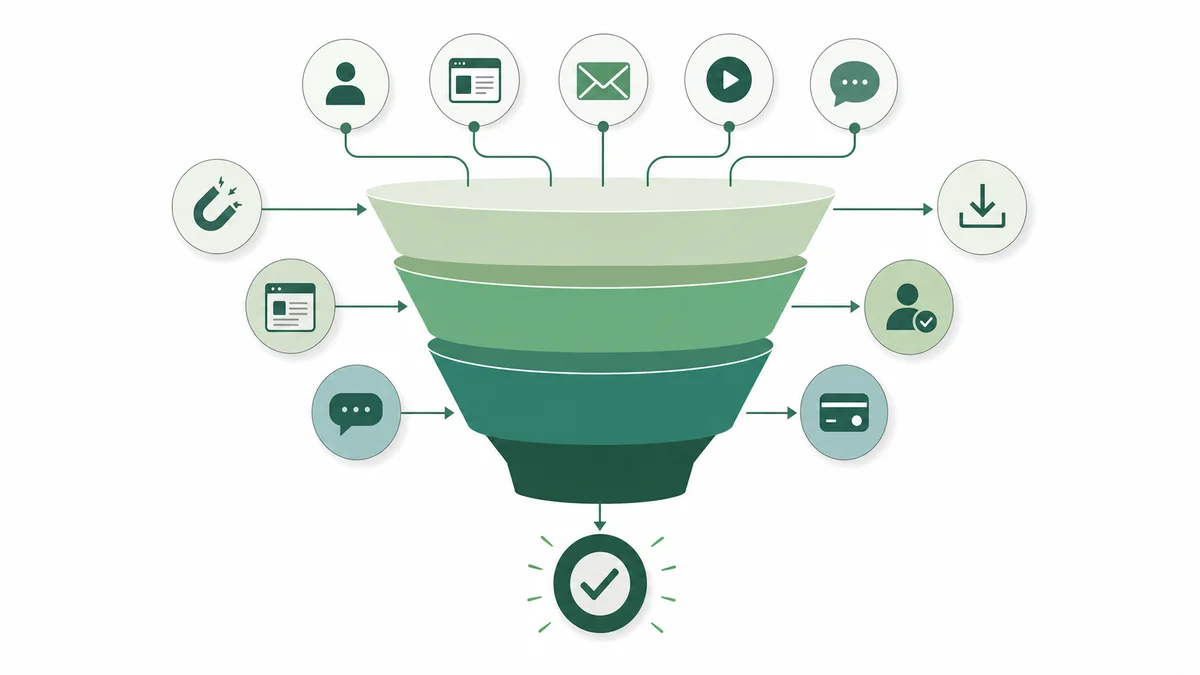
An attribution model is any system that answers the question: which marketing activity caused this deal? The answer matters because every channel that receives credit is more likely to receive future investment.
The challenge in B2B SaaS is that no single touchpoint causes a deal. A buyer might read a blog post, see a LinkedIn ad, attend a webinar, receive an outbound email, and then search for the company's name before booking a demo. A model that assigns all credit to the last action, or the first, misrepresents what actually influenced the decision.
Three factors make attribution harder in B2B than in B2C:
Revenue operations (RevOps) is the function that aligns marketing, sales, and customer success around a shared funnel and one set of metrics. Attribution is one component of a RevOps model, not a standalone fix.
B2B marketing uses three broad categories of attribution models: single-touch models that assign all credit to one touchpoint, rule-based multi-touch models that distribute credit across several touchpoints using a fixed formula, and algorithmic models that weight touchpoints using machine learning. The right category depends on sales cycle length, buying committee size, and the volume of conversion data available to train the model.
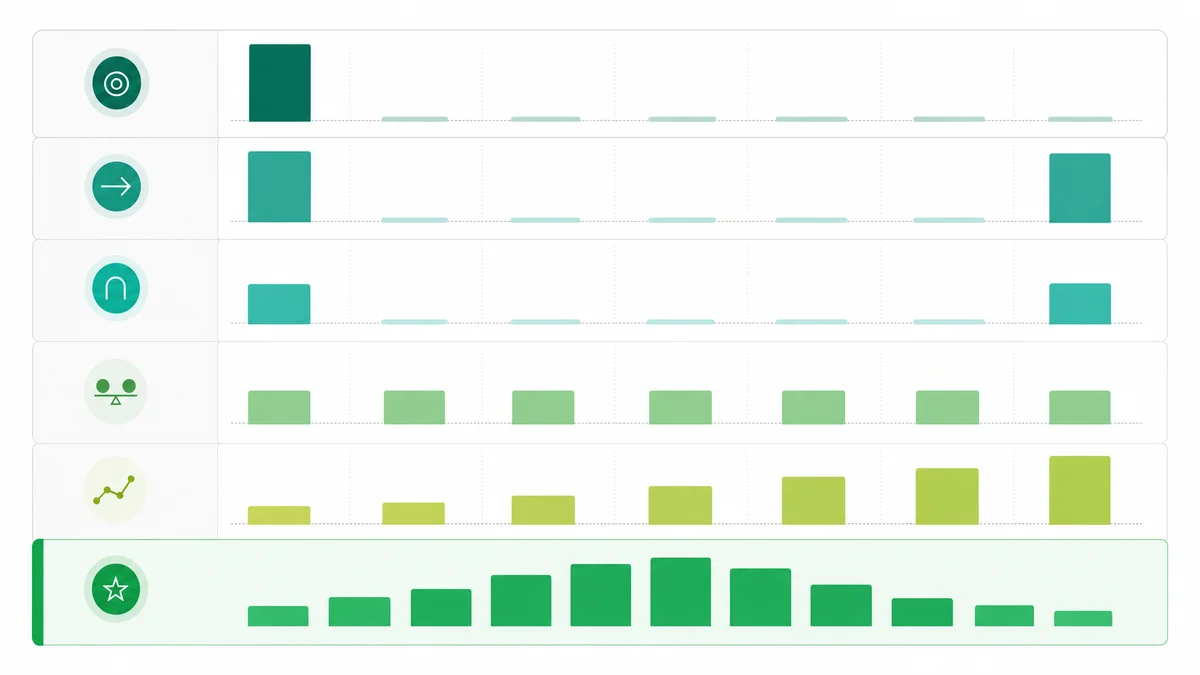
Single-touch models assign 100% of conversion credit to one touchpoint. They are simple to implement and easy to explain, but they ignore every other interaction in the buyer journey.
| Model | Credit goes to | Typical use case | Key limitation in B2B |
|---|---|---|---|
| First-touch | The first recorded interaction | Understanding demand sources | Ignores everything between first touch and close |
| Last-touch | The final interaction before conversion | Tracking what prompted action | Overweights branded search and demo requests |
First-touch attribution is the method that assigns all credit to the first recorded marketing interaction. It is useful for understanding which channels create awareness and bring new buyers into the funnel. It fails in B2B because an ad seen six months before a purchase decision tells a team little about what closed the deal.
Last-touch attribution is the method that assigns all credit to the final recorded touchpoint before a form fill or opportunity creation. It is the default in most CRM systems. It is simple but systematically overweights the last step in the journey, which is often a branded search query or a direct visit prompted by earlier work.
Rule-based multi-touch models distribute credit across multiple touchpoints using a predefined formula.
| Model | Credit distribution | Strength | Limitation |
|---|---|---|---|
| Linear | Equal credit to every touchpoint | Recognises the full journey | Treats all touchpoints as equally important |
| W-shaped | Heavy weight to first touch, lead creation, and opportunity creation; lighter weight to middle touches | Weights key stage transitions | Relies on CRM stages being correctly defined |
| Full-path | Weighted credit to first touch, lead creation, opportunity creation, and close | Covers the complete funnel | Requires clean stage data throughout |
Linear attribution spreads credit equally across every recorded touchpoint. It avoids the extremes of single-touch models but treats an awareness ad the same as a product demo, which is rarely accurate.
W-shaped attribution concentrates credit at three pivotal moments: the touchpoint that first brought the buyer in, the touchpoint that created the marketing-qualified lead (MQL), and the touchpoint that created the opportunity. Smaller credit goes to interactions in between. This model weights the moments that changed the buyer's status in the funnel.
Full-path attribution adds a fourth weighted point at closed-won, distributing credit across all four stage transitions with smaller weight to interactions in between. It requires accurate and complete stage data in the CRM to produce reliable results.
Data-driven attribution is an algorithmic model that uses machine learning to assign credit to touchpoints based on conversion patterns observed in the account's own historical data. Google Ads uses data-driven attribution as its default model; linear, time decay, and position-based models are no longer supported in the platform.
Data-driven attribution requires a minimum conversion volume to be statistically meaningful. For accounts with low conversion counts, the model defaults to simpler logic. This constraint affects many B2B SaaS accounts, where sales-qualified lead (SQL) volumes per month may be in the dozens rather than the thousands.
Every attribution model carries a structural blind spot in a long B2B sales cycle. Single-touch models ignore most of the buyer journey. Rule-based multi-touch models apply fixed weights regardless of actual influence. Algorithmic models need large conversion volumes to be statistically reliable. Across 104 audited B2B SaaS accounts, 78% of form fills never became a sales-qualified lead (GrowthSpree, June 2026; source not linked per editorial policy), making form-fill-based attribution especially unreliable as a foundation for any model.

Last-touch attribution assigns all credit to the final recorded touchpoint before a form fill or opportunity creation. In a B2B funnel, that touchpoint is often a branded search query: the buyer already knew the company's name, searched for it, clicked an ad or an organic result, and converted. Last-touch attribution then reports that branded paid search caused the deal.
The consequence is predictable. Budget moves toward branded terms, which capture existing demand rather than creating it. The channels that built awareness and educated the buyer earlier in the cycle receive no credit and face cuts.
Our data: Across 104 audited B2B SaaS Google Ads accounts and $78.0M in spend, 78% of form fills never became a sales-qualified lead (GrowthSpree, June 2026; source not linked per editorial policy). When those form fills are the conversion event fed into the attribution model, the model optimises for the wrong outcome entirely.
Rule-based multi-touch models are more accurate than single-touch, but they assume every touchpoint was tracked. Buyers conduct substantial research before filling any form. They read comparison content, ask peers, watch videos, and attend events. None of those interactions appear in a CRM or ad platform report.
The W-shaped and full-path models also assume that the CRM stage transitions they weight, including MQL creation, opportunity creation, and close, are correctly and consistently recorded. When stage definitions are applied inconsistently, the model's weights apply to noise rather than signal.
Data-driven attribution in Google Ads performs best with sufficient conversion volume at the conversion action level. Many B2B SaaS accounts generate far fewer SQLs per month than the platform needs. When conversion volumes are low, the model's outputs become less statistically reliable.
The practical solution is to feed Google's data-driven model a higher-volume conversion event at an earlier funnel stage, such as a demo request or MQL creation, and report separately on SQL and pipeline outcomes in the CRM. This keeps the ad platform learning while ensuring business decisions are made on qualified outcomes.
All models share one foundational weakness: they are only as good as the data the CRM contains. Without a click identifier stored at the lead record level, it is impossible to match a closed-won deal back to the ad click that started the journey, regardless of which attribution model is applied.
A revenue operations (RevOps) model for a Series A SaaS company combines written funnel stage definitions, a CRM that stores click identifiers with every lead, a stated attribution approach, and a shared pipeline report that both marketing and sales use. Attribution is one layer of this model, not a standalone fix; the model also covers lead routing, pipeline coverage tracking, and a forecast method the board can interrogate.
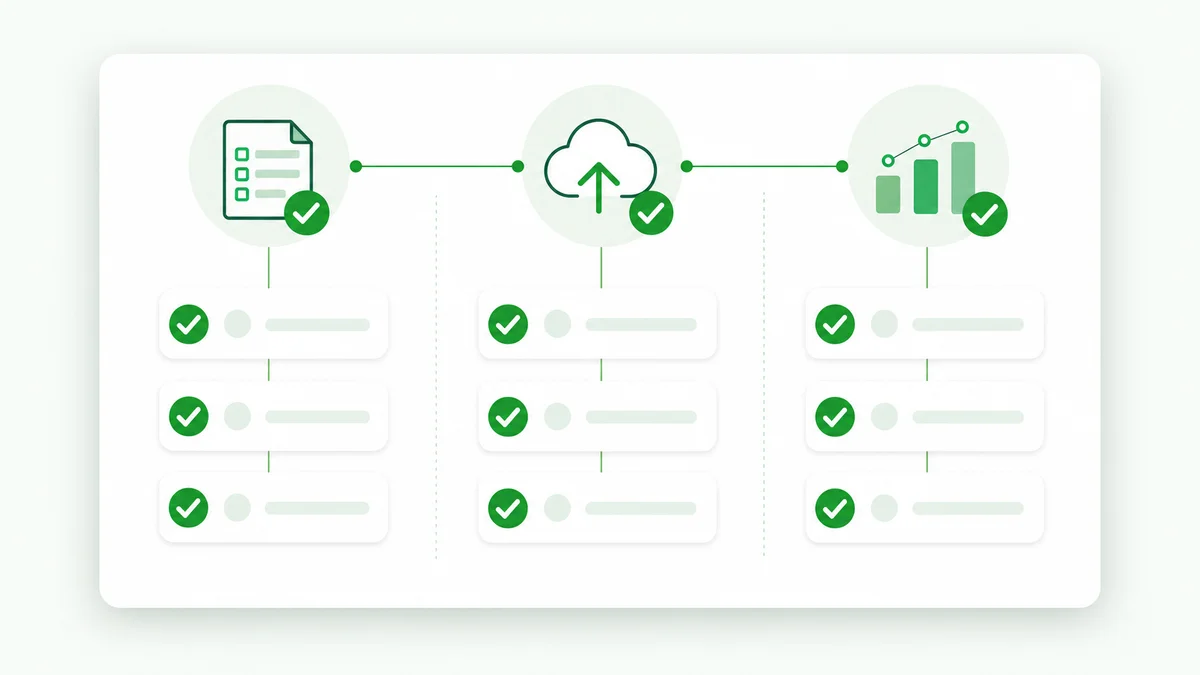
In an audit of 104 accounts, the share of closed-won deals traceable to a campaign went from 0% to 67% after a 90-day attribution fix (GrowthSpree, June 2026; source not linked per editorial policy). That shift shows how much a complete model changes what is visible to the team.
Attribution only makes sense against defined funnel stages. If an MQL means different things to marketing and sales, then any model attributing revenue to MQL-creating touchpoints is attributing to an undefined event.
Each stage needs a written entry criterion tied to a buyer action, not a seller judgment. Conversion rates vary significantly by channel: one benchmark across 50+ clients shows MQL to SQL conversion of 26% for paid search, 30% for LinkedIn, and 51% for SEO (First Page Sage, June 2025). A separate benchmark for B2B SaaS Google Ads gives a median MQL to SQL rate of 13% to 18% (GrowthSpree, April 2026; source not linked per editorial policy). These two sources define stages differently and should not be averaged. Stage definitions directly change what conversion rates look like, which means attribution outputs will differ depending on how stages are written.
Our data: After a 90-day attribution fix across 104 audited B2B SaaS accounts, the share of closed-won deals traceable to a campaign rose from 0% to 67%. Before the fix, 91% of those accounts had no Google click ID (GCLID) reaching the CRM (GrowthSpree, June 2026; source not linked per editorial policy).
Every lead record should carry the click identifier from the channel that originated it. For Google Ads, that is the Google click ID (GCLID). Without it, there is no way to trace a closed-won deal back to the campaign that generated the first interaction.
A hidden form field captures the GCLID at submission and writes it to a field on the lead or contact record in the CRM. This step is typically implemented through a native CRM-Google integration or a custom script. Google moved custom offline conversion uploads to the Data Manager API from June 15, 2026. Any team setting up offline conversions should verify the current upload method against Google's current documentation, as platform rules change.
A stated attribution approach is a written decision about which model the team uses for which purpose. Ad platforms, CRMs, and analytics tools each report attribution differently by default. Without a stated approach, teams compare numbers from different models without realising it.
A practical approach for a Series A SaaS company:
Attribution outputs need a home that both marketing and sales use. When marketing reports from the ad platform and sales reports from the CRM, the numbers will differ. That difference consumes time in every pipeline review.
A shared pipeline report shows source by stage, with the attribution model used labeled clearly. It does not resolve the philosophical question of which model is "right," but it stops the argument about whose numbers are correct.
The median private B2B SaaS company spends 8% of annual recurring revenue (ARR) on marketing (SaaS Capital, June 2026, 1,000+ companies). At that budget level, misattributing which channels drive pipeline creates real allocation errors, not theoretical ones.
Attribution models require three data conditions before they produce reliable results: a click identifier stored with every lead record in the CRM, a defined qualified conversion event rather than a raw form fill, and consistent UTM parameters on every campaign link. Across 104 audited B2B SaaS Google Ads accounts, 91% had no Google click ID reaching the CRM (GrowthSpree, June 2026; source not linked per editorial policy), meaning attribution in those accounts ran on severely incomplete data.
The GCLID must be captured at form submission and written to a field on the lead or contact record in the CRM. Without it, offline conversion uploads cannot connect ad clicks to CRM outcomes, and no attribution model can trace a deal back to its originating campaign.
Our data: In an audit of 104 B2B SaaS Google Ads accounts, 91% had no GCLID reaching the CRM and 89% were running default attribution with no deliberate choice (GrowthSpree, June 2026; source not linked per editorial policy). These accounts were tracking ad-platform conversions that had no connection to qualified pipeline in the CRM.
A form fill is not a reliable conversion event for attribution. Across 104 audited accounts, 78% of form fills never became a sales-qualified lead (GrowthSpree, June 2026; source not linked per editorial policy). Sending form fills back to Google as conversions teaches the bidding algorithm to optimise for low-quality submissions.
The qualified event to send back is the SQL or opportunity stage, triggered when sales accepts the lead against written criteria. This requires the CRM to fire that event and pass it to the ad platform through the offline conversion upload workflow.
UTM parameters are tags appended to URLs that tell the CRM, via analytics, which campaign, medium, and source brought a visitor. Without consistent UTM tagging, the CRM cannot attribute web sessions to campaigns, and multi-touch models in the CRM have incomplete touchpoint records.
A simple UTM governance approach:
The table below summarises the three data conditions and their implementation requirements:
| Data condition | What it enables | Common failure mode |
|---|---|---|
| GCLID stored at lead record | Offline conversion upload; close-to-click tracing | Hidden field missing on form; CRM field not mapped |
| Qualified conversion event | Bid algorithm optimises for pipeline, not form fills | Using form submit as the conversion event |
| Consistent UTM parameters | Multi-touch CRM attribution; source reporting | Ad links tagged; email links not; direct traffic inflated |
A B2B SaaS team should choose an attribution model based on three factors: sales cycle length, qualified conversion volume available to train an algorithmic model, and the data already captured in the CRM. Teams with sales cycles under 30 days and single-stakeholder deals can use simpler models. Teams with 60-plus-day cycles and buying committees need multi-touch CRM reporting, supplemented by self-reported attribution to capture channels that leave no digital footprint.
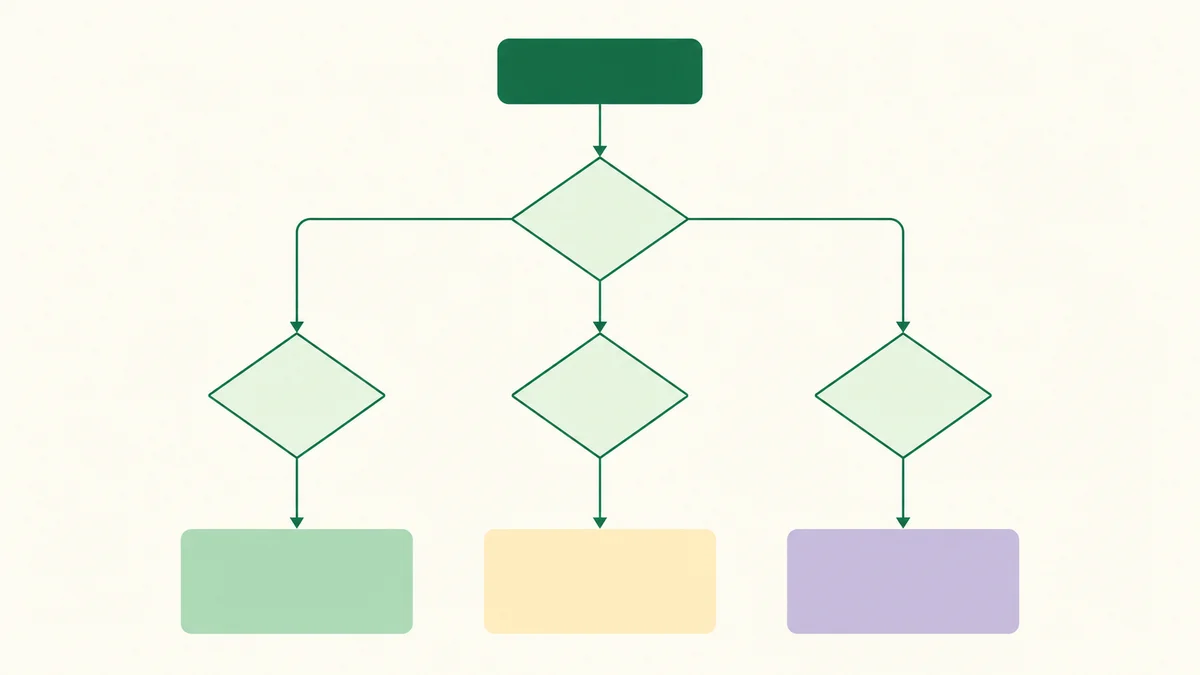
Self-reported attribution is the practice of capturing a prospect's own answer to a "how did you hear about us" question at form submission or sales discovery. It surfaces channels that leave no trackable digital footprint: word of mouth, podcasts, analyst conversations, peer recommendations, and content consumed before any ad was clicked.
Cost per SQL is a more reliable optimisation signal than click-through rate. Across 1,412 ad variants in 96 B2B SaaS accounts, cost per SQL tracked pipeline at a correlation of 0.71, while click-through rate tracked pipeline at a correlation of only 0.09 (GrowthSpree, June 2026; source not linked per editorial policy). A model that optimises for clicks rather than qualified pipeline outcomes produces volume without value.
| Company stage | Sales cycle | Recommended approach |
|---|---|---|
| Pre-Series A, small team | Under 30 days | First-touch in CRM; last-touch in ad platform; "how did you hear about us" field on every form |
| Series A, 2-5 person GTM team | 30 to 90 days | W-shaped or full-path in CRM; data-driven in Google Ads; self-reported at discovery |
| Series B and above, multiple channels | 60 to 180+ days | Full-path in CRM; data-driven in ad platforms; branded search lift tracking; self-reported at every stage |
Many B2B SaaS accounts run fewer than 50 SQLs per month. At that volume, data-driven attribution in Google Ads lacks the statistical input it needs to perform reliably. Two practical approaches address this:
A published median cost per SQL on Google Ads runs $800 to $2,500 (GrowthSpree, April 2026; source not linked per editorial policy). At that cost, optimising for the wrong conversion event is an expensive error.
Meet with an expert for a free consultation on your attribution setup.
Attribution models in B2B SaaS cannot capture every influence on a purchase decision. Word of mouth, executive relationships, conference conversations, and dark social content leave no trackable signal in a customer relationship management (CRM) system. A stated attribution approach is a starting point, not a complete measurement system. Teams that treat any single attribution model as definitive will systematically underfund channels that create demand without claiming the last click.
Attribution modelling at the level described in this guide assumes a CRM is in place and operational. Companies with no CRM, no sales team, or fewer than 10 SQLs per quarter will find the setup cost exceeds the decision value at their current stage. For those teams, a self-reported "how did you hear about us" field and a simple first-touch source field in the CRM are sufficient starting points.
Teams using attribution figures from published ranges with no stated sample or methodology should treat those figures as orientation, not as benchmarks. Every range on this page that lacks a stated sample is labeled as such.
Published ranges (no stated method) suggest single-model attribution accuracy of 38% to 58%, with a hybrid of multi-touch, self-reported, and branded search lift rated at 82% to 92% (GrowthSpree, 2026; source not linked per editorial policy; no sample or method stated). These figures are labeled as opinion. They indicate that combining methods is likely better than relying on one model, which is consistent with the structural arguments above, but they should not be cited as measured findings.
B2B marketing uses single-touch models (first-touch, last-touch), rule-based multi-touch models (linear, W-shaped, full-path), and algorithmic models (data-driven). Single-touch models are simple but miss most of a B2B buyer journey. Multi-touch models distribute credit across touchpoints. Data-driven attribution, the current Google Ads default, uses machine learning to weight each touchpoint based on conversion patterns in the account's own data.
A revenue operations (RevOps) model for a Series A SaaS company starts with written funnel stage definitions, a customer relationship management (CRM) system that stores click IDs with every lead, and a stated attribution approach shared by marketing and sales. Attribution is one layer; the model also covers lead routing, pipeline coverage tracking, and a forecast method the board can interrogate.
Google Ads uses data-driven attribution by default; other models including linear, time decay, and position-based are no longer supported in the platform. For cross-channel reporting, a combination of multi-touch attribution in the CRM, a self-reported "how did you hear about us" field, and branded search lift analysis provides a more complete picture than any single model, particularly for sales cycles of 60 days or more.
Last-touch attribution assigns all revenue credit to the final touchpoint before a form fill or opportunity creation. In B2B SaaS, where a median sales cycle runs 84 days and buying committees include multiple stakeholders, the last touch is often a branded search or a demo request prompted by earlier content, paid ads, or outbound work. Crediting only the last touch systematically undervalues the channels that created demand.
Attribution requires three data conditions: a click identifier such as a Google click ID (GCLID) stored with every lead record in the CRM; a defined conversion event that represents a qualified stage rather than a raw form fill; and consistent UTM parameters on every paid and organic link. Without these, an attribution model runs on incomplete data and produces misleading results, regardless of which model is chosen.
Self-reported attribution captures a prospect's own answer to a "how did you hear about us" question at form submission or sales discovery. It complements CRM-tracked attribution by surfacing channels that left no trackable digital footprint, such as word of mouth, podcasts, or dark social. Neither method is complete alone; used together, they give a more accurate picture of what influenced the decision.
Attribution models in B2B marketing are not a reporting preference. They determine which channels receive credit, which channels receive budget, and whether the feedback loop between spend and revenue is accurate or broken.
The core takeaways from this guide:
No single model gives the complete picture. The most practical starting point is to fix the data foundations first, choose one multi-touch model for CRM reporting, and add a self-reported field at every conversion point.
Meet with an expert for a free consultation on your attribution setup.
Spoke pages in this cluster are forthcoming:
Every figure on this page names its source and, where the source states no sample size or method, that limitation is noted explicitly. GrowthSpree figures are cited by publisher name and date only; they are not hyperlinked per this publication's editorial policy. First Page Sage and SaaS Capital figures are linked at their first mention. Platform rules for Google Ads attribution and offline conversion uploads have been documented as of October 2026 and should be re-verified against Google's current documentation before implementation. This page carries a visible last-updated date. For sourcing methodology, see the Methodology page.
© 2026 revopsforb2bsaas.com All rights reserved.